
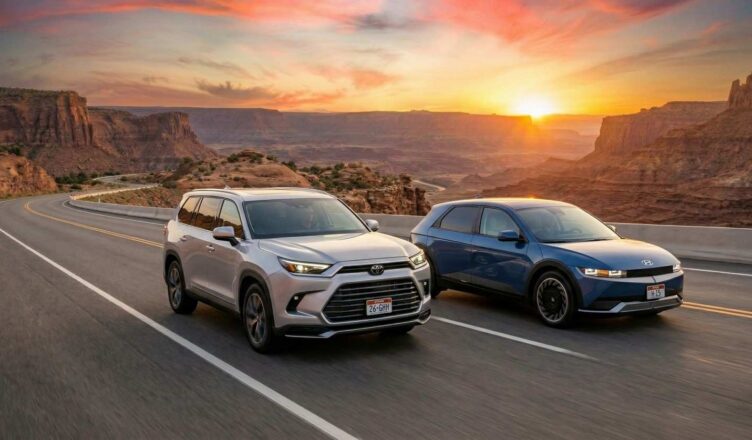
You’re somewhere in western Kansas, the road stretching flat and endless, and the only thing you notice about your car is that your back doesn’t hurt and you haven’t thought about fuel in hours. That’s when you know you picked the right one.
Cross-country trips don’t expose horsepower numbers or marketing claims—they expose seat comfort, real-world range, cargo usability, and how quietly a vehicle handles 400-mile days. This guide breaks down the vehicles that actually hold up over long distances in 2026, using EPA Fuel Economy Data, IIHS Safety Ratings, and long-term ownership estimates from Edmunds’ True Cost to Own. You’ll see where hybrids still dominate, where EVs make sense, and which models I’d personally take coast-to-coast.
What Actually Matters After 1,000 Miles
Comfort beats everything. Not acceleration. Not styling. You start noticing seat cushioning around hour four and wind noise around hour six. Vehicles like the Toyota Grand Highlander Hybrid and Honda Odyssey get this right—wide seats, good lumbar support, and suspension tuned for long-distance smoothness rather than sporty stiffness.
Range matters too, but not in the way people think. It’s not about maximum range—it’s about how often you have to stop. According to the latest EPA Fuel Economy Data, hybrids still offer the best balance here, often pushing 500–600 miles per tank in real highway conditions.
And then there’s driver fatigue. Systems like adaptive cruise control and lane-centering—rated and tested by the IIHS Safety Ratings—aren’t luxuries anymore; they’re sanity savers.
The Shortlist: 2026 Vehicles That Actually Deliver
| Vehicle | Powertrain | EPA MPG / Range | Cargo Space | Starting Price (Approx.) |
| Toyota Grand Highlander Hybrid | Hybrid | 34 mpg combined | 97.5 cu ft | $44,500 |
| Honda Odyssey | Gas | 22 mpg combined | 158 cu ft | $38,000 |
| Subaru Outback | Gas | 28 mpg combined | 75.6 cu ft | $30,500 |
| Hyundai Ioniq 5 | EV | 303 miles range | 59.3 cu ft | $43,000 |
| Ford F-150 PowerBoost Hybrid | Hybrid | 24 mpg combined | 77 cu ft bed | $52,000 |
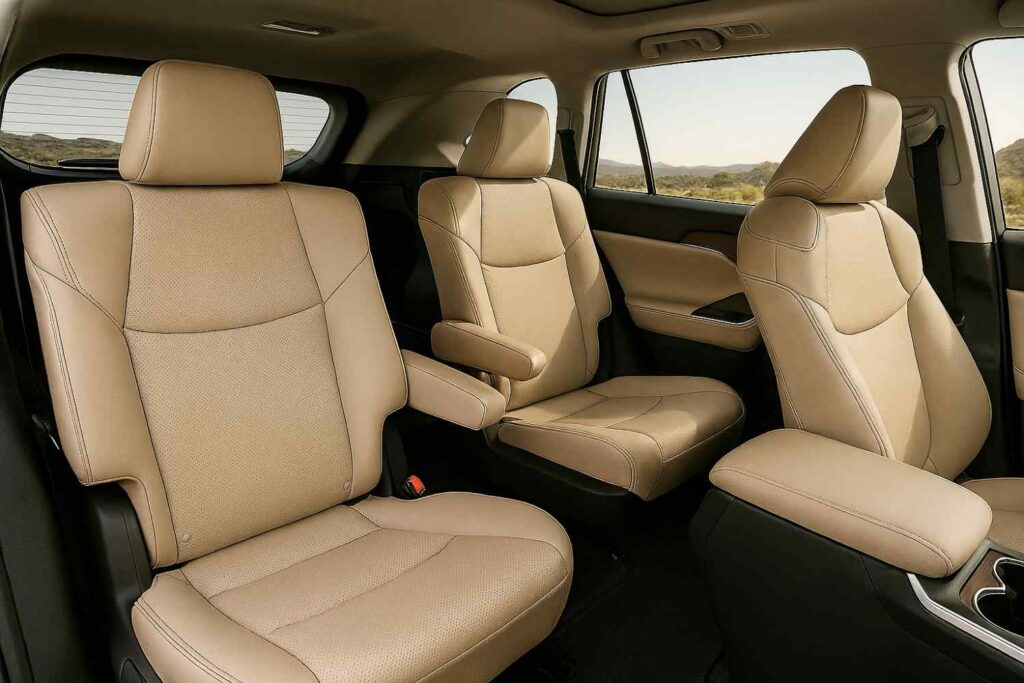
Toyota Grand Highlander Hybrid: The Long-Haul Default
In my assessment, this is the easiest recommendation for most people. The Grand Highlander Hybrid delivers around 34 mpg combined, which translates into fewer stops and less mental math about fuel. It’s quiet at highway speeds, and the third row is actually usable for adults.
However, it is not perfect. Acceleration is fine, not exciting, and the driving feel is more appliance than adventure. If you want something engaging, look elsewhere.
Honda Odyssey: Still the Road Trip King
The Odyssey remains one of the best long-distance vehicles because it solves problems SUVs don’t: sliding doors in tight parking lots and massive interior space. The ride quality is excellent—soft enough for comfort, controlled enough to avoid float.
Fuel economy lags behind hybrids, though. At around 22 mpg combined, you’ll stop more often. Over a full cross-country trip, that difference adds up in both time and cost.
Subaru Outback: The Quiet Overachiever
The Outback works because it’s honest: good ground clearance, standard all-wheel drive, and just enough space for two people and their gear without feeling oversized. On rougher roads, it’s more composed than most crossovers in this price range.
The base engine feels underpowered when loaded, though. Passing at highway speeds takes planning, which is a significant drawback if you are covering big distances quickly.
Hyundai Ioniq 5: The EV That Almost Works Everywhere
The Ioniq 5, with about 300 miles of estimated range, makes cross-country EV travel practical through fast charging. According to Department of Energy (DOE) EV resources, it can go from 10% to 80% in under 20 minutes under ideal conditions.
Infrastructure still matters, though. If your route sticks to major highways, it’s surprisingly workable, but planning overhead increases in rural states.
The Tradeoffs and Reliability
Every road trip vehicle involves compromise. Reliability still matters more than any feature list. According to the J.D. Power 2026 Vehicle Dependability Study, brands like Toyota and Honda continue to perform well in long-term ownership data.
What I’d Actually Choose (And Why)
If you’re driving coast-to-coast regularly, the Toyota Grand Highlander Hybrid is the cleanest choice. It balances efficiency and comfort better than anything else here. For families, I’d take the Honda Odyssey without hesitation.
Before you decide, run your expected mileage through the Edmunds’ True Cost to Own calculator and compare fuel or charging costs using the EPA Fuel Economy Data. Check IIHS Safety Ratings for your specific trim to see where the real differences show up.
References
- EPA Fuel Economy Data (2026)
- IIHS Safety Ratings
- Edmunds True Cost to Own (2026)
- J.D. Power 2026 Vehicle Dependability Study
- DOE EV Resources and Infrastructure
Disclaimer: The information provided in this article is for educational and informational purposes only. It does not constitute professional advice. Readers should conduct their own research and consult with qualified professionals before making any decisions.
