
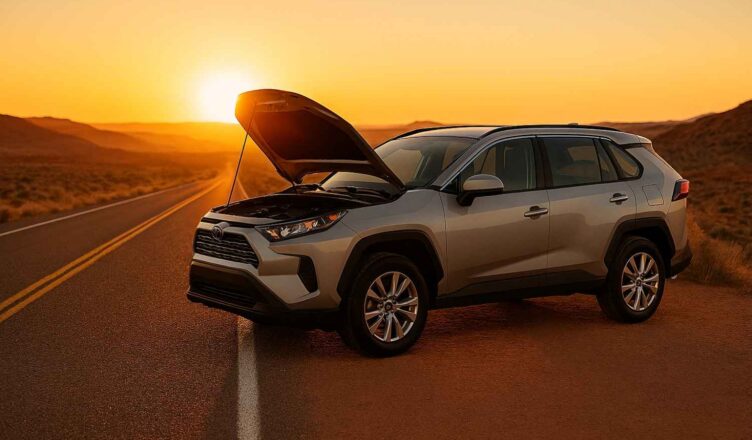
The last time I was 200 miles from the nearest town in Utah, it wasn’t a dramatic engine failure that stopped us. It was a $22 serpentine belt.
And that’s the pattern. Most road trips don’t end because something catastrophic happens. They stall out because of small, predictable failures—the kind you can prepare for if you know what tends to go wrong.
This is a breakdown of what actually fails on long-distance drives across the U.S., why it happens, and what you should carry in your trunk because of it. We’re pulling from real-world failure data, including insights aligned with the 2026 Vehicle Dependability findings from J.D. Power and common roadside assistance trends reported by the AAA 2026 Driving Costs Study.
You won’t need everything on this list. But you’ll want the right things.
Tires Fail More Than Engines Ever Will
You probably won’t blow an engine on a highway run. But a tire? That’s another story.
According to the AAA 2026 Driving Costs Study, flat tires consistently rank among the top service calls across the U.S. Long highway stretches heat up tires, especially in summer states like Arizona, Nevada, and Texas. Add underinflation—or worse, worn tread—and you’ve got a failure waiting to happen.
Modern cars make this tricky because many manufacturers have phased out the full-size spare to save weight and improve fuel economy. In our assessment, relying solely on a “fix-a-flat” aerosol can is a high-risk strategy for the Southwest or the Rockies, where a sidewall tear from a sharp rock can render sealant useless.
What to Carry for Tire Issues
| Item | Why It Matters | Typical Cost (USD) |
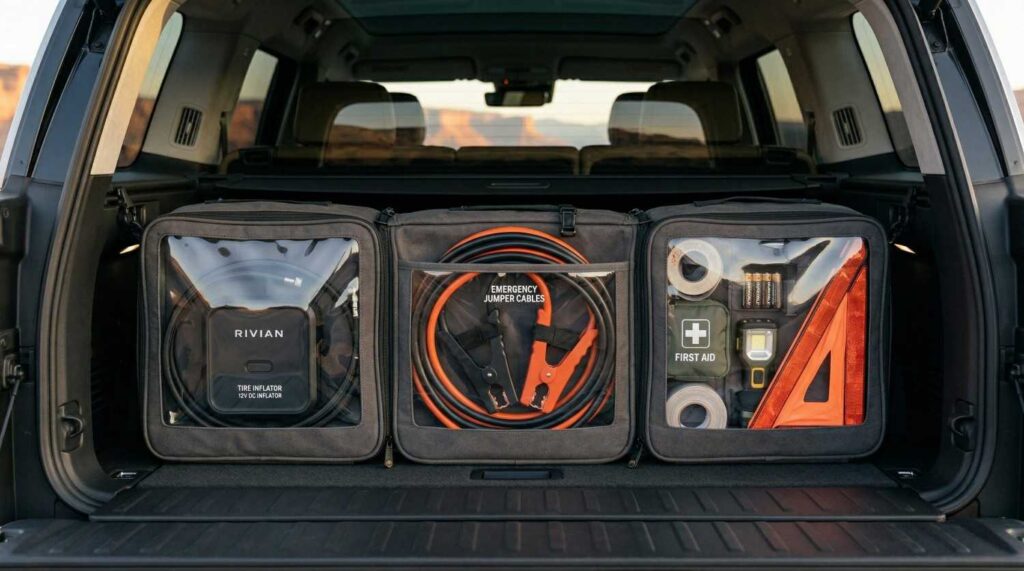
| Portable tire inflator | Lets you top off pressure anywhere | $30–$70 |
| Tire plug kit | Temporary fix for small punctures | $10–$25 |
| Full-size spare | More reliable than compact spare | $150–$300 |
| Tire pressure gauge | Prevents issues before they start | $10–$20 |
A portable inflator is non-negotiable. It’s the difference between continuing your trip and waiting hours for roadside help. If you aren’t comfortable using a plug kit, prioritize the spare and a quality lug wrench.
Batteries Quit Without Warning
Cold mornings in Colorado. Hot afternoons in Nevada. Long idle stops at scenic overlooks with the AC running. That combination drains batteries faster than most people expect.
Modern vehicles rely heavily on electronics, and battery failures remain a primary roadside issue according to J.D. Power’s 2026 dependability data. When a battery dies in a remote area, it is rarely convenient.
What to Carry for Battery Failures
- Portable jump starter (lithium-ion)
- Battery terminal cleaner or brush
- Basic multimeter (optional, but useful for testing alternator health)
A portable jump starter beats jumper cables every time. You don’t need another car, and you’re not stuck flagging down strangers on a rural highway. However, we advise against purchasing “no-name” generic jump starters from discount marketplaces. These often fail to provide the peak cranking amps required for larger SUV engines in extreme cold, and their internal cells can degrade rapidly when stored in a hot trunk.
If you’re driving a newer SUV loaded with screens and sensors, the electrical load alone can stress an aging battery. We recommend testing any battery older than three years before leaving. You can also check estimated battery replacement intervals and ownership costs using the Edmunds True Cost to Own calculator—it gives a clearer picture than guessing.
Cooling Systems Fail Quietly
This failure often catches people off guard because you don’t always get a warning before overheating. A small coolant leak or failing water pump can go unnoticed for hours, especially at highway speeds where airflow masks rising temperatures.
According to the 2026 FHWA Southwest Scenic Corridor Report, high-ambient temperatures in the desert transitions can trigger “heat soak” in cooling systems that are already marginally maintained.
What to Carry for Cooling Issues
- Extra coolant (OEM spec): Never mix colors; ensure it matches your vehicle’s requirements.
- Distilled water: A vital emergency backup if you lose a significant amount of coolant.
- Work gloves: Essential for safe handling under a hot hood.
Carrying coolant won’t fix a major radiator crack, but it might buy you enough miles to reach the next town instead of calling a tow truck in the middle of a cellular dead zone.
Belts and Hoses: Small Parts, Big Problems
Serpentine belts drive your alternator, water pump, and AC. If it snaps, your vehicle stops within minutes. Rubber hoses aren’t much better; heat cycles over thousands of miles weaken them, especially in vehicles over five years old.
What to Carry for Belt and Hose Issues
- Spare serpentine belt (specifically for your engine model)
- Basic tool kit (socket set, screwdrivers)
- Heavy-duty duct tape (for temporary hose patches)
I’ve seen duct tape hold a split radiator hose long enough to reach a service station. It’s not a permanent fix, but it works in a pinch. If your vehicle has a complicated belt routing that requires specialized tools, focus more on a professional inspection before the trip rather than carrying a spare you cannot install yourself.
The Rise of Electronic and Sensor Failures
While mechanical components have generally become more durable, the J.D. Power 2026 Vehicle Dependability Study highlights that software and sensor issues are now a top concern for owners.
A failing oxygen sensor or a glitchy mass airflow sensor can trigger a “Check Engine” light and put your vehicle into “limp mode,” which limits your speed to 30 or 40 mph. In the vast stretches of the American West, being stuck at 30 mph on a 75 mph highway is dangerous.
What to Carry for Electronic Issues
- OBD-II scanner: A basic Bluetooth reader can tell you if a code is “critical” or just an “evap leak” that can wait until you reach a city.
- Printed emergency contacts: Digital systems can fail; paper doesn’t.
- Physical maps: Critical for when GPS sensors or cellular data fails in mountain canyons.
Fuel System Realities
Running out of fuel sounds like a rookie mistake, but in rural parts of the U.S. where stations can be 100 miles apart, it happens frequently. Furthermore, “bad gas” from low-volume rural stations can cause fuel injectors to clog.
You can cross-check fuel economy and range estimates on fueleconomy.gov to plan stops more accurately. We recommend never letting your tank drop below a quarter-full when traveling between national parks.
What I Actually Pack (After 60,000 Miles)
After years of long-haul driving, here is the refined list that makes the cut for every trip:
- Portable tire inflator: Used on nearly every third trip for pressure adjustments.
- Lithium jump starter: Essential for peace of mind.
- Full-size spare: Because “donuts” aren’t rated for 75 mph highway speeds.
- Basic tool kit: A 50-piece set covers 90% of minor roadside fixes.
- Coolant and 2 gallons of water: For the car and the humans.
Conclusion: Pack for Probability, Not Catastrophe
If you’re driving a newer vehicle on maintained highways, your biggest risks are tires, batteries, and small wear items. In our assessment, the single smartest investment is a portable tire inflator and a high-quality jump starter.
But this article cannot account for every scenario. If you’re towing or driving an older vehicle, your risk profile shifts. Before your next trip, check your tire condition, test your battery, and run your fuel range through fueleconomy.gov. Use tools like Edmunds True Cost to Own and IIHS Safety Ratings to understand your vehicle’s baseline before you hit the road.
Then pack smart. And go.
References
- EPA Fuel Economy Data (2026 Updates)
- IIHS Vehicle Safety Ratings
- Edmunds True Cost to Own (2026 Data)
- J.D. Power 2026 Vehicle Dependability Study
- AAA 2026 Driving Costs Study
- America’s Byways — FHWA (2026 Southwest Scenic Corridor Report)
Disclaimer: The information provided in this article is for educational and informational purposes only. It does not constitute professional advice. Readers should conduct their own research and consult with qualified professionals before making any decisions.
