
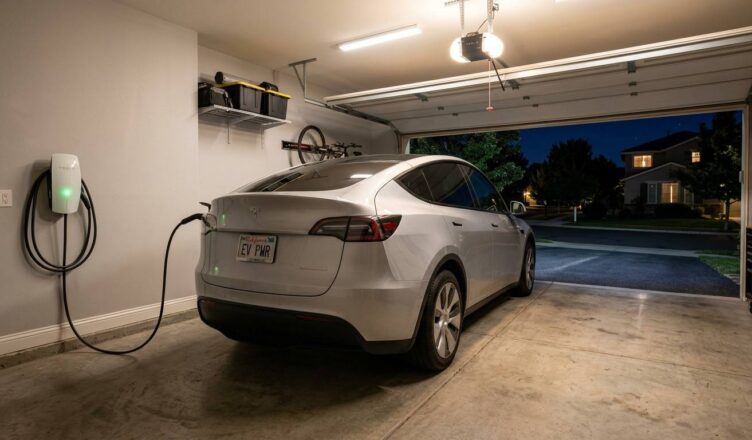
You plug in at 10 PM. By morning, your car is full. That is the part most people get right about EV ownership. The part they underestimate is what it takes to make that simple overnight routine actually work at home—and what it costs to get there in 2026.
This guide breaks down the real setup: Level 1 vs Level 2 charging, installation costs that electricians do not advertise upfront, how much range you actually gain per hour, and what federal incentives can offset. We are pulling from U.S. Department of Energy data, EPA efficiency figures, and current IRS tax credit rules so you can plan this without guesswork.
Because the car is only half the story. The outlet matters just as much.
Level 1 vs Level 2 Charging: What Actually Works at Home
Most EVs come with a basic charging cable that plugs into a standard 120V outlet. And yes, it works. But here is the reality: Level 1 charging adds roughly 3–5 miles of range per hour, according to the U.S. Department of Energy Alternative Fuels Data Center.
That means a full recharge can take over 24 hours for many modern EVs with 250+ mile EPA ranges. Think of it like filling a bathtub with a dripping tap. It gets there. In the end.
Level 2 charging, on the other hand, runs on a 240V circuit—the same type used for a clothes dryer. That bumps charging speed to 20–30 miles of range per hour, depending on the vehicle and charger.
This is the difference that makes EV ownership feel seamless. If your daily driving is under 40 miles, Level 1 might technically cover it. But in our assessment, most households quickly outgrow it—especially once you forget to plug in one night and need a fast recovery the next day.
Charging Speed Comparison (Real-World Estimates)
| Charging Type | Voltage | Miles Added Per Hour | Full Charge Time (60 kWh battery) | Typical Use Case |
| Level 1 | 120V | 3–5 miles | 24–36 hours | Light daily driving |
| Level 2 | 240V | 20–30 miles | 6–10 hours | Most home setups |
Source: U.S. DOE Alternative Fuels Data Center (2026)
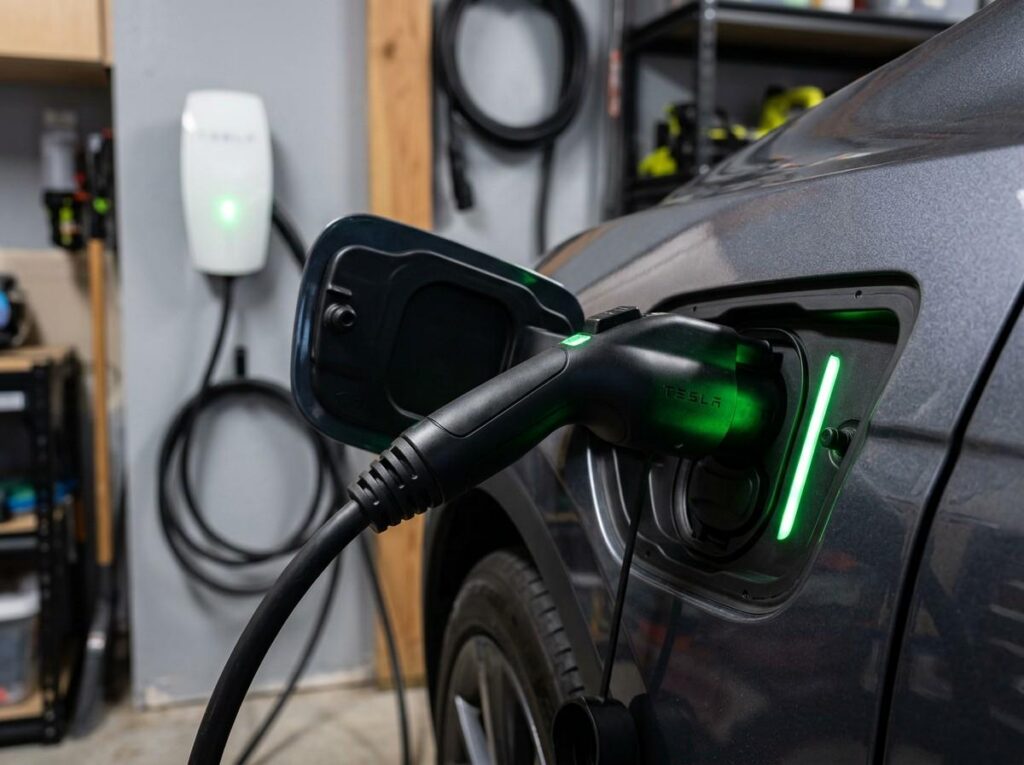
What It Costs to Install Home Charging in 2026
The number most people hear first is misleading. “You can install a charger for $500.” This is technically true but rarely realistic. Here is what the actual cost breakdown looks like in 2026:
Typical Home Charging Costs
| Component | Estimated Cost (USD) |
| Level 2 charger hardware | $400 – $800 |
| Electrical panel upgrade (if needed) | $1,000 – $3,000 |
| Installation labor | $500 – $2,000 |
| Permit + inspection | $100 – $500 |
| Total typical range | **$1,000 – $5,000** |
The biggest variable is not the charger—it is your electrical panel. Older homes often do not have spare capacity for a 240V circuit, which means upgrading from a 100-amp panel to 200 amps. That is where costs climb quickly.
In our experience, newer homes with existing 200-amp service often land closer to $1,200–$2,000 total. Older homes? Budget more. And yes, you should get multiple quotes.
The Equipment You Actually Need (And What You Don’t)
You need fewer things than you think. But they need to be the right ones. At minimum, a proper Level 2 setup includes:
- A wall-mounted EVSE (Electric Vehicle Supply Equipment—basically the charger).
- A dedicated 240V circuit.
- A compatible connector (J1772 or NACS, depending on your car).
Smart chargers with Wi-Fi apps, energy tracking, and scheduling features are common now. Some are useful; some are not. Here is the honest take: scheduling is nice if your utility offers time-of-use electricity rates. Otherwise, most of the “smart” features do not change your daily experience much. This is one area where marketing runs ahead of real benefit.
How Much Electricity You Will Actually Use
Charging at home is usually cheaper than gas, though not always dramatically. According to the EPA Fuel Economy Data, most EVs consume 25–35 kWh per 100 miles. If your electricity rate is $0.15 per kWh, that translates to:
- $3.75–$5.25 per 100 miles.
- Compare that to a gasoline car at 30 mpg with $3.50/gallon fuel: About $11.67 per 100 miles.
That is a real difference. But your local rate matters. California and Northeast states can push electricity costs higher, narrowing the gap. Meanwhile, off-peak rates in some regions can cut EV charging costs in half.
Federal and State Incentives Can Offset Costs
This part is easy to miss. The federal government still offers a 30% tax credit (up to $1,000) for home EV charger installation under the IRS Alternative Fuel Infrastructure Credit.
Details are available through the IRS clean vehicle credits page. Some states add their own rebates—often $200 to $1,000 depending on location and utility provider. This can bring a $2,000 install down to closer to $1,200. Just check eligibility carefully. Income limits and location-based rules apply, and not every ZIP code qualifies in 2026.
V2G and Future-Proofing for 2027
As we look toward 2027, “bidirectional charging” or Vehicle-to-Grid (V2G) technology is becoming a conversation starter. This allows your EV to not only take power from your home but also send it back during a blackout.
If you want to future-proof your installation, consider a charger that supports bidirectional flow. While more expensive now, it may save you from buying a separate home battery backup system later. It is worth noting that this requires a specific vehicle and a compatible electrical gateway, adding complexity to the 2026 install.
Installation Reality: What Electricians Do Not Say Upfront
Your installation timeline depends on three things: panel capacity, distance from panel to charger, and local permitting. A simple install can take half a day. A complex one—especially with trenching or panel upgrades—can stretch into weeks.
One more thing: charger placement matters more than people expect. A poorly placed unit can mean awkward cable routing every night. This is a big deal. If you can, mount it near where your charge port sits naturally, not just where it looks cleanest on the wall.
Conclusion: The Setup That Makes EV Ownership Work
A Level 2 home charging setup makes the most sense for homeowners who drive daily and want charging to fade into the background. It is the difference between thinking about your battery and forgetting it exists.
If your home already has 200-amp service, installation is usually straightforward. Older homes require more planning and a larger budget. Before you commit, verify your eligibility through the IRS credit page and look up local utility programs. Then run your long-term ownership costs using tools like Edmunds’ True Cost to Own calculator to see how savings stack up.
Because once the setup is right, the daily experience is exactly what people hope it will be. Plug in. Wake up full.
References
- DOE Alternative Fuels Data Center
- DOE Charging Station Locator
- EPA Fuel Economy Data
- Federal EV Tax Credit (IRS)
- Edmunds True Cost to Own
Disclaimer
Disclaimer: The information provided in this article is for educational and informational purposes only. It does not constitute professional advice. Readers should conduct their own research and consult with qualified professionals before making any decisions.
